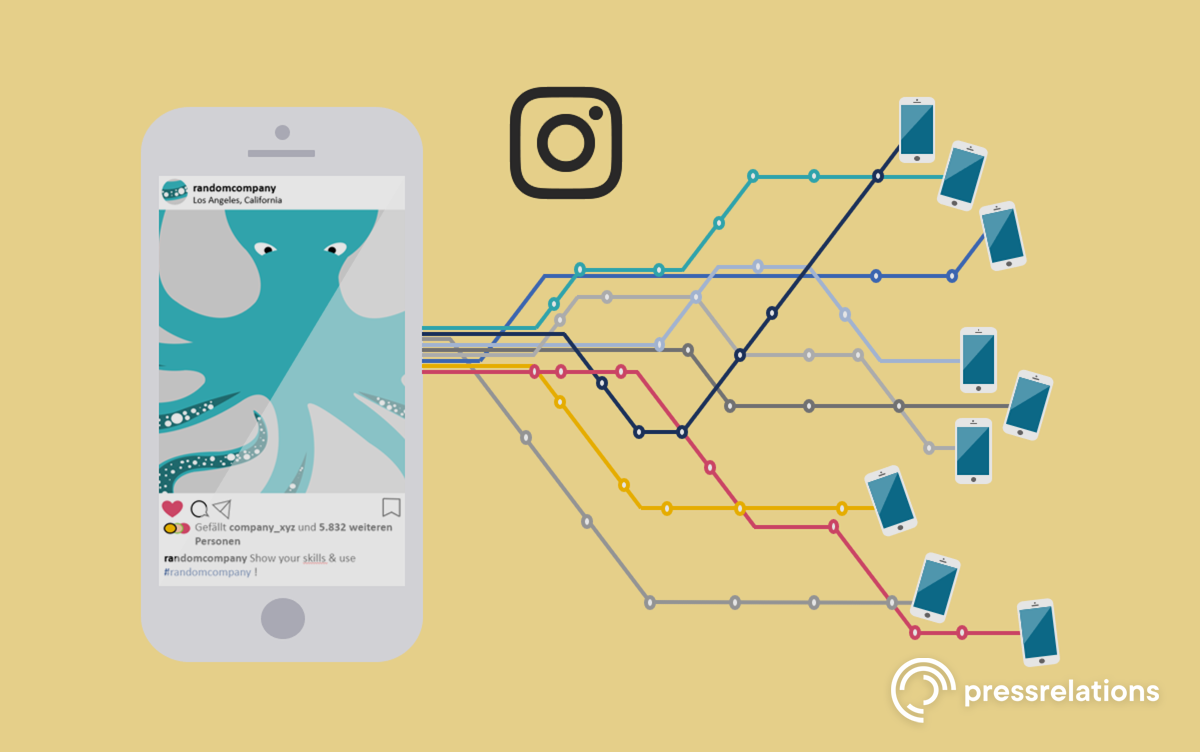

Millions of new articles, posts, and pieces of content are created every day. For communications departments, this presents both an opportunity and a challenge: they must identify relevant signals from an overwhelming amount of information and translate them into meaningful actions. Media intelligence is evolving rapidly – from mere observation to a tool that informs decisions, initiates processes, and makes impact measurable. The focus is shifting: away from reporting and towards decision intelligence.
From Reporting to Decision Intelligence
For a long time, monitoring was synonymous with documentation. Today, that’s no longer enough. Companies want to know not only what was reported, but also the implications.
“Our industry is evolving into business intelligence solutions that support customers in their decision-making.” – Johannes Burk, Head of Global Business Development North America
With this statement, he describes the core of the current development: media intelligence no longer simply provides data, but helps prepare decisions – for example, which topics are relevant, where risks arise, or which communication measures are effective. In this context, business intelligence means not viewing insights in isolation, but embedding them in existing business processes. Communication data thus flows into strategic planning, is linked with key performance indicators from marketing and sales, and contributes to making decisions with measurable added value.
The central question is which information actually influences the company or brand and how it is prioritized in real time. Predictive analytics and real-time monitoring form the basis for this. They enable data-driven evaluation of communication activities and simulation of scenarios – a crucial step towards predictable impact.
How AI Prioritizes Data Streams and Triggers Processes
New technologies enable information to not only be collected, but also structured and prioritized in real time.
When media intelligence evolves into decision intelligence, a new requirement arises: insights must not only be visible, but also capable of being directly translated into concrete next steps. This means that media intelligence solutions will need to be more deeply integrated into operational processes in the future – for example, by automatically forwarding relevant content or preparing action steps.
These developments raise the question of how such media intelligence solutions must be designed to meet these new requirements. This discussion is already underway in many markets and is shaping expectations for future functionalities. Virginia Chen, Chief Operating Officer Asia-Pacific, describes a media intelligence solution that actively translates information into actionable tasks.
AI-powered classification, sentiment analysis, and predictive trend detection help organize large amounts of information by topic, urgency, and potential impact. This creates clear priorities that show which content requires immediate action and which should be monitored. Based on this, the appropriate next steps can be automatically prepared or forwarded to the responsible teams.
Just as important as this prioritization is transparency throughout the entire process. Modern media intelligence solutions document which content triggered a reaction, which decisions were made, and what effect the action had. This creates a traceable cycle – from detection to action to evaluation. Insights no longer disappear into reports but are continuously integrated into daily work and thus permanently embedded.
Humans Remain in the Loop – Context, Trust, Responsibility
Automation creates speed and transparency – but it doesn’t replace experience. Media intelligence remains effective when people and technology work hand in hand. AI filters, prioritizes, and recognizes patterns. Humans interpret, connect, and make decisions. This creates a balance between analytical precision and responsible contextualization – an interplay that provides guidance instead of simply delivering data.
Trust in data is a central theme of this development. When AI automates processes, the question of the credibility and quality of the information takes center stage. Communication teams need to know which sources they can trust and how to interpret the results of an analysis. Here, the human component plays a crucial role – it verifies, evaluates, and takes responsibility for how data is interpreted and processed.
The Next Stage of Decision Intelligence: The Adaptive Copilot
The next stage of development goes beyond mere automation.
It is already clear that media intelligence must become significantly more dynamic: Instead of isolated snapshots, systems are needed that make the lifecycle of topics visible – from their initial emergence to the point at which their relevance diminishes. This entails the requirement to identify developments early, make stakeholders visible, and actively support communication strategies. In a media environment where an increasing proportion of content is generated automatically, this form of predictive and context-sensitive analysis becomes a key prerequisite.
From this perspective, it becomes clear where media intelligence is headed: toward tools that not only recognize patterns but also anticipate developments and thereby enable well-informed decisions. The idea of an adaptive copilot fits into this picture.
“An adaptive copilot that measures impact and automatically recommends the next communication steps.” – Fady El-Murr, Managing Partner, pressrelations
The idea behind it: Media intelligence systems could not only analyze past campaigns in the future, but also demonstrate various communication scenarios. Based on historical data, identified narratives, FirstSignals trends, and impact models, potential developments can be explored – for example, which topics are gaining relevance or how a message might unfold in different contexts. This creates a system that not only analyzes but also reveals options for action, indicating which measures are likely to be successful, which are less effective, and how strategic communication can be adapted early on.
Media intelligence thus becomes a management tool for communication – agile, transparent, and adaptable to the realities of modern organizations. The combination of technology and consulting is crucial here. pressrelations unites both worlds: software that intelligently links data and analysts who develop tangible strategies from it. This creates a hybrid model that combines scalability with personal expertise – and supports customers where they have the greatest added value: making the right decision at the right moment.
How Insights Lead to Action
Observation becomes action: Media intelligence is transforming from a reporting tool into a decision-making engine. AI helps to organize information and initiate processes. People ensure that these insights are translated into meaningful strategies.
The goal remains clear: Relevant information should reach the people where it will have an impact – for faster, better, and more transparent decisions.