Licensing has become one of the most significant — and at the same time least transparent — cost factors in international media monitoring. Particularly with regard to the Chinese market, many companies lack a clear understanding of how licensing costs are structured and which legal frameworks actually apply. A frequently raised question is whether China has a structured licensing model comparable to Germany’s PMG, or whether fundamentally different mechanisms are at work.
COPYRIGHT LAW IN CHINA: WHY ENFORCEMENT IN MEDIA MONITORING IS CHALLENGING
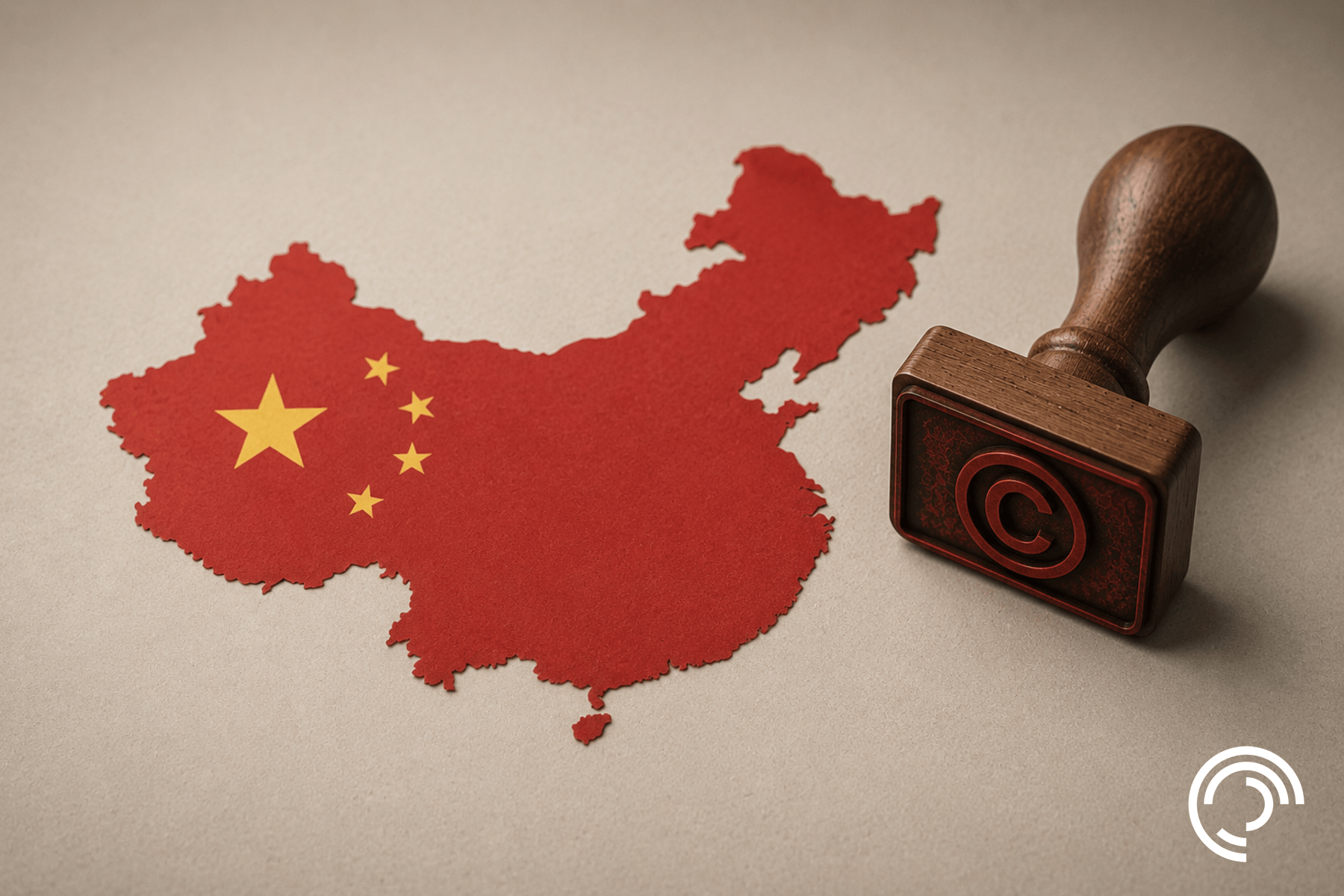
China does, in principle, have a functioning copyright system. With the 2021 reform of the Chinese Copyright Law, it was once again clarified that journalistic content is protected by copyright and that extensive reproduction generally requires licensing.
The challenge, however, lies less in the law itself than in its practical enforcement. In China, copyright infringements are usually pursued only if rights holders actively initiate legal action themselves. Many Chinese media organizations — particularly state-affiliated outlets — rarely take action against monitoring providers or commercial aggregators. Reasons include high litigation costs as well as the fact that broad distribution of journalistic content simultaneously increases their own reach and visibility.
In addition, Chinese courts tend to interpret the concept of “reasonable use” comparatively broadly, especially where content is used in the context of information dissemination or news reporting.
LICENSING IN CHINA: WHY THERE IS NO EQUIVALENT TO PMG
Although various collective management organizations exist in China, they currently provide only limited coverage for media monitoring. Organizations such as the China Written Works Copyright Society (CWWCS) and the China Audio Video Copyright Association (CAVCA) primarily focus on traditional licensing sectors such as publishing rights, music, or audiovisual content.
Media monitoring and press review services, by contrast, are not centrally managed through collective licensing structures. At present, there is no structural equivalent to Germany’s PMG system.
Another important factor is the special role of state media in China. A large share of journalistic content originates from state-controlled media organizations such as Xinhua News Agency, People’s Daily, or China Central Television (CCTV). Their content partly follows an implicit “public good” logic: the dissemination of official information is viewed less as a commercial use case and more as part of public information supply.
Private media companies often demonstrate a stronger awareness of copyright protection and licensing. However, the market remains highly fragmented, which has so far prevented the establishment of standardized licensing models.
MEDIA MONITORING IN CHINA: HOW PROVIDERS OPERATE THROUGH “TECHNICAL COMPLIANCE”
Against this backdrop, the Chinese monitoring industry often operates on the basis of tacit market practices. In many cases, the focus is less on formal copyright licensing and more on what is commonly referred to as “technical compliance.”
Typical approaches used by Chinese monitoring providers include:
- Crawling publicly accessible websites under the argument that only indexes or summaries are being created rather than full reproductions of journalistic content. In addition, paywalls remain less widespread compared to Western markets, as many media organizations still prioritize reach over subscription-based business models.
- Data partnerships with platforms such as Weibo or WeChat. These agreements primarily concern technical access to data rather than copyright licensing of journalistic content.
- End clients, such as international corporations or PR agencies, are generally not required to provide proof of existing press review licenses.
This differs significantly from Germany, where companies are often contractually required to hold the appropriate PMG and/or VG Wort licenses.
Compared with other international markets, substantial differences exist in the interpretation of licensing obligations and copyright law.
COPYRIGHT AND AI IN CHINA: WHY REGULATION IS INCREASING
Despite the comparatively open market practices to date, these developments should not be underestimated. Globally, sensitivity toward copyright-related issues is increasing, particularly in digital environments. Several developments in China also suggest that stricter licensing models may emerge over the longer term.
1. Copyright disputes related to AI training are increasing
The boom in generative AI is prompting media organizations to protect their content more aggressively and take stronger action against unauthorized use. In particular, training data and automated content processing are coming under increasing scrutiny.
2. The Cyberspace Administration of China (CAC) is tightening regulation
The Cyberspace Administration of China continues to strengthen its control over digital news content and online platforms. In the future, this may also indirectly affect commercial monitoring and aggregation services.
3. Paywalls are making the crawling of journalistic content more difficult
Leading media organizations such as Caixin are increasingly shifting toward subscription-based business models and stricter paywalls. As a result, automated crawling of full content is becoming both technically and legally more challenging.
4. Copyright alliances are taking stronger action against unauthorized use
Organizations such as the China News Media Copyright Protection Alliance are actively advancing copyright protection and have supported several lawsuits in recent years against large-scale unauthorized use of journalistic content.
CONCLUSION: WHAT COMPANIES SHOULD CONSIDER WHEN CONDUCTING MEDIA MONITORING IN CHINA
Copyright law in Chinese media monitoring therefore exists within a complex field of tension between established legal frameworks, the absence of collective licensing structures, limited enforcement, and long-standing market practices.
To minimize copyright risks, the most reliable approach is to avoid large-scale redistribution of full articles, focus on summaries and analytical insights, work with authorized data providers, avoid scraping paywalled content, and establish clear internal-use policies.
With stable and reliable data partners in China, pressrelations is able to provide multi-channel media data access combined with local expertise and a deep understanding of the Chinese media landscape. This enables our clients to better monitor their brand reputation and evaluate communication performance in one of the world’s most complex media environments.
The legal frameworks governing media monitoring and press review services differ significantly across international markets. In China in particular, regulatory uncertainty, technical market practices, and copyright-related questions intersect in complex ways.
If you have questions regarding international licensing law, press reviews, or media monitoring in China, we would be happy to provide tailored advice. Together, we develop solutions that take both regulatory requirements and practical market realities into account.